
Skip links

Non-Destructive Testing (NDT)

Rental Instruments

Non-Destructive Testing equipment

Get a Quote

What is NDT?

Non-Destructive Testing (NDT) is a broad group of analysis techniques used in science, industry, and manufacturing to evaluate the properties of a material, component, or system without causing damage. This means the item being tested can be inspected and assessed without affecting its future usefulness, making NDT a crucial process in ensuring safety, reliability, and integrity across various industries.

Why is NDT Important?

NDT plays a critical role in quality control, maintenance, and safety assurance. It helps detect flaws, defects, or irregularities in materials that could lead to failures if left undetected. Industries such as aerospace, oil and gas, manufacturing, automotive, and construction rely on NDT to prevent costly downtimes, enhance product quality, and safeguard personnel.
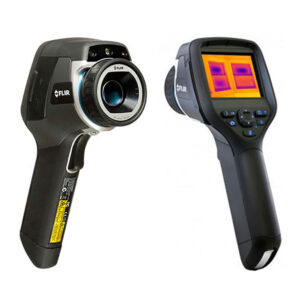
Common NDT Methods

  1. Ultrasonic Testing (UT): Uses high-frequency sound waves to detect internal flaws or characterize materials.
  2. Radiographic Testing (RT): Employs X-rays or gamma rays to view the internal structure of a component.
  3. Magnetic Particle Testing (MT): Detects surface and near-surface discontinuities in ferromagnetic materials using magnetic fields.
  4. Dye Penetrant Testing (PT): Reveals surface-breaking defects by applying a liquid dye to the surface of the component.
  5. Eddy Current Testing (ET): Uses electromagnetic induction to detect cracks and defects in conductive materials.
  6. Visual Inspection (VI): The simplest form of NDT, involving direct observation with the naked eye or with aids like magnifying glasses or cameras.

Applications of NDT

  • Aerospace: Inspection of aircraft components, engines, and structures to ensure safety and compliance with industry standards.
  • Oil & Gas: Evaluation of pipelines, pressure vessels, and storage tanks for corrosion, cracks, and other defects.
  • Construction: Assessment of welds, concrete structures, and other building materials for integrity.
  • Manufacturing: Quality assurance of raw materials, semi-finished products, and final assemblies.

Benefits of NDT

  • Cost-Efficiency: Minimizes downtime and reduces the need for destructive testing methods that consume resources.
  • Safety: Early detection of potential failures helps prevent accidents and enhances workplace safety.
  • Accuracy: Advanced NDT technologies provide precise data that aid in decision-making.
  • Sustainability: Helps extend the lifespan of components by identifying issues early, promoting repair over replacement.

NDT is an indispensable solution in modern industry, offering a non-invasive, reliable way to ensure quality and safety. Its versatility and effectiveness make it essential for maintaining standards, improving products, and protecting assets and people.

stars

UNMATCHED CUSTOMER SERVICE

Ajax Rentals is your #1 online destination where you can find a variety of water, air, and soil sampling and analysis equipment to rent with daily, weekly, and monthly term options. From instruments like handheld XRF Analyzers to a wide variety of gas, water, and ionic leak detection equipment. Don’t buy costly instruments and equipment for a short-term project – rent with Ajax!